Providing customers with complete wiring harness solutions and services


Information Details
Protection measures required for abs wire harness
Published Time:
2021-01-25 18:29
Protection measures required for wire harnesses
The maintenance requirements for wire harnesses should consider the following aspects: first, selecting appropriate materials for the harness itself; second, maintaining the wire connection points within the harness; and third, caring for the hole-type terminals inside the harness. Below, Haozhi will explain how to better maintain wire harnesses by addressing these key areas.
Harness Data Selection
Wire harnesses typically consist of multi-strand, copper-based flexible wires, and some are even silver-plated. Often, a thin layer of highly conductive silver is applied to the surface of the copper wires to enhance their electrical performance. Most importantly, the appropriate wire diameter or cross-sectional area must be chosen based on the maximum current the wire will carry.
In addition to considering the wire gauge, it’s also crucial to take into account the environment and functional requirements where the wire harness will be installed. For instance, engines often operate in harsh conditions—high temperatures, corrosive gases, and abundant liquids—so when selecting wires, it’s essential to opt for materials that offer excellent resistance to heat, corrosion, abrasion, and vibration.
Moreover, there is a wide variety of wire types available, and each country may have its own unique classification system, with differing emphasis points and manufacturing standards. At ABS wire harness processing plants, production decisions regarding the selection of electronic wires are carefully tailored to the specific operating environment and exact requirements of the ABS wire harness—in most cases, wires with polyvinyl chloride (PVC) insulation are commonly used.
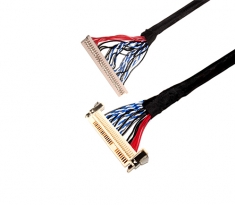
Harness Medium-gauge wire connection maintenance
The connection points between wires within a wiring harness are called harness connectors. These connectors are commonly found in instrument harnesses, vehicle audio harnesses, engine compartment harnesses, and air conditioning harnesses. Through these connectors, signal transmission can be achieved between switches and multiple electrical devices. Therefore, it is essential to adopt effective measures. Typically, after connectors are joined, the exposed copper wires of the wire cores are prone to oxidation. Moreover, when multiple connectors are bundled together inside the harness, they can easily cause unintended electrical connections between adjacent points, leading to short circuits—and in severe cases, even triggering vehicle fires. For this reason, harness connectors must be properly protected with materials that offer excellent insulation properties.
The materials used for wrapping connectors vary depending on the specific working environment. PVC tape is typically applied to wire harness connectors that experience minimal environmental exposure—such as instrument panel harnesses, overhead harnesses, body-in-white harnesses, four-door harnesses, and interior air-conditioning harnesses. In contrast, connectors in areas like the front compartment harness and engine harness are usually wrapped with double-layer heat-shrink tubing, which provides excellent waterproofing, high-temperature resistance, and abrasion protection. However, this method comes at a slightly higher cost compared to using PVC tape.

Liuzhou Shuangfei Auto Electrical Parts Manufacturing Co., Ltd.
Copyright © 2025Liuzhou Shuangfei Auto Electrical Parts Manufacturing Co., Ltd.
www.300.cn SEO
business license
Contact Us
Address: No. 1, Chuangye Road, Xinxing Industrial Park, Liuzhou, Guangxi
Email:scb@lzsfdq.com
Tel:+86-15177741919

Mobile Website